How Smart Film Works
Smart Electronic Tint™'s Smart Film uses liquid crystals sandwiched between layers of adhesive film, applied directly to your existing glass. Powered on, the crystals align and the glass turns clear - 88% visible light transmission. Powered off, they scatter light and the glass turns opaque - 11% transmission, 98% haze. The switch takes under 200ms to clear and under 10ms to opaque, so it feels instant - flip a switch and the room changes.
Control is electrical, not manual - a wall switch or timer triggers it, not a cord or a blind. UV blocking is 99%+ in both states, protecting furniture and flooring from fading whether the film is clear or opaque.
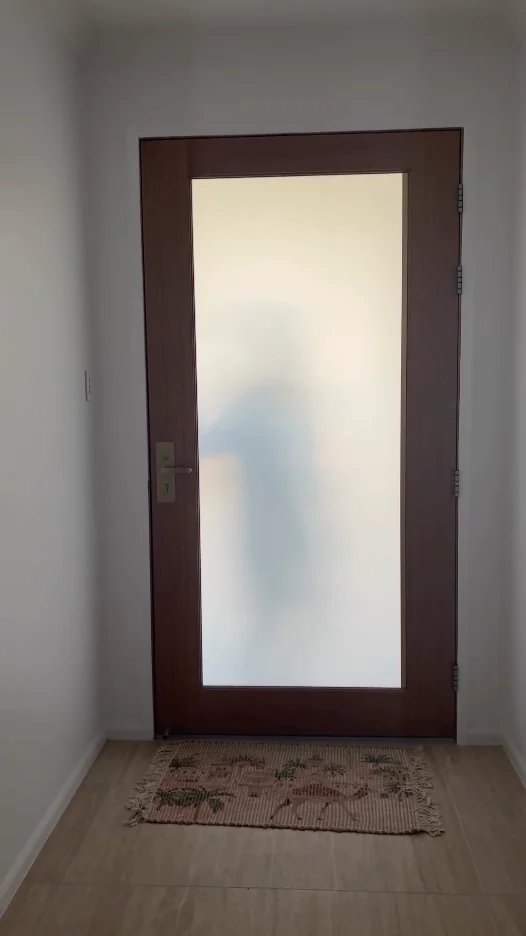
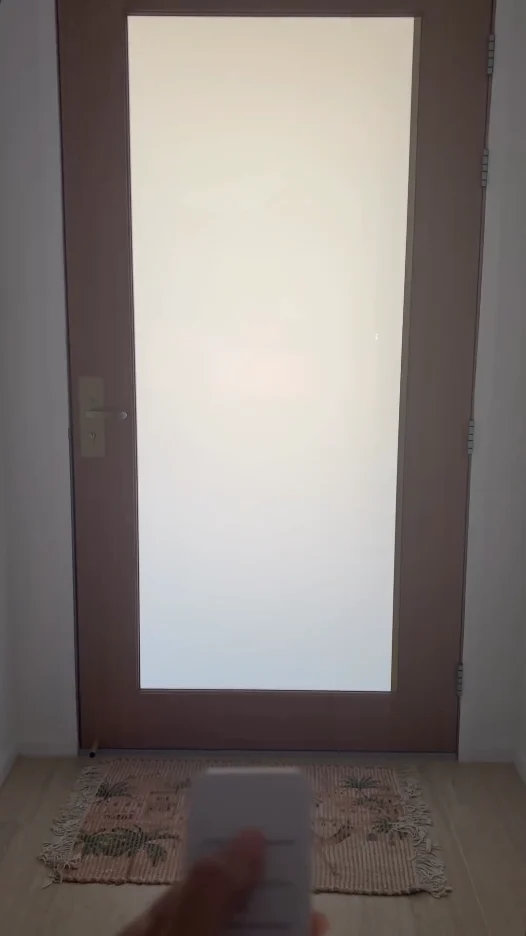
Here's what that looks like on a real home job.
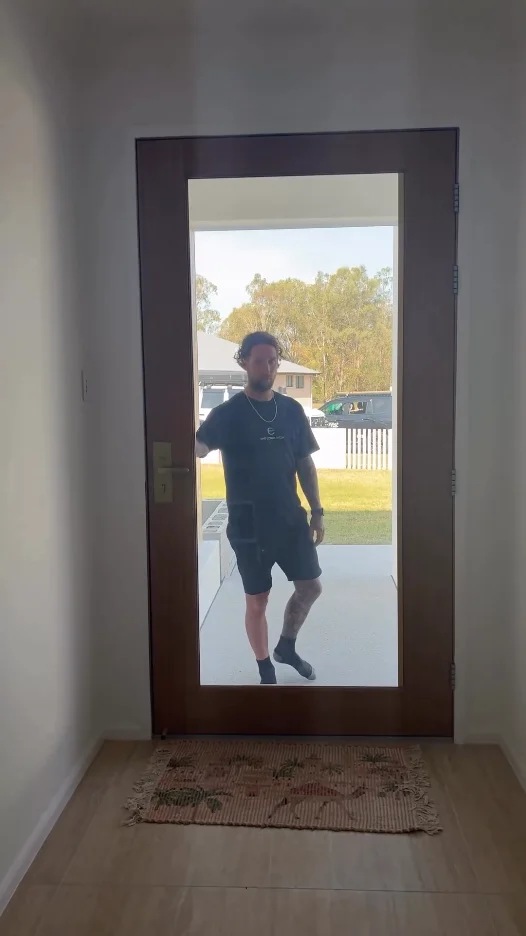
Open & Transparent
Private & Secure
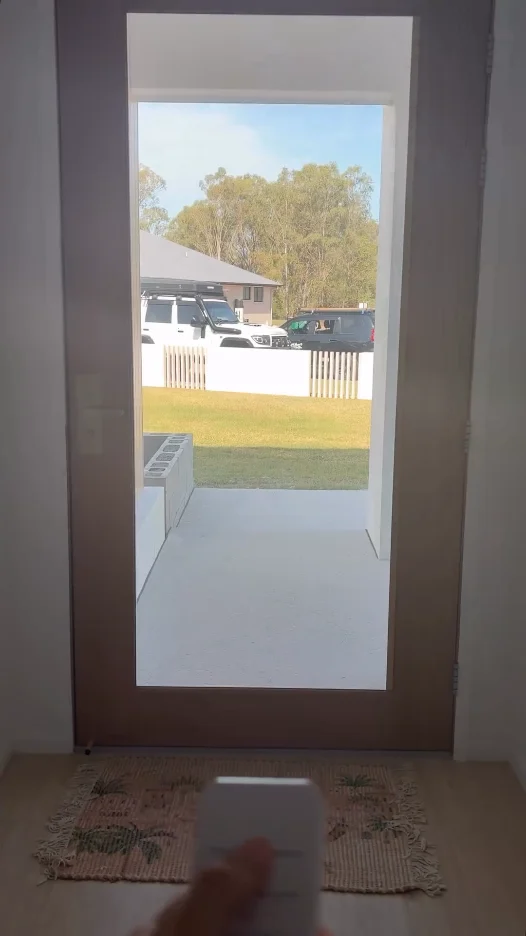
Open & Transparent
Private & Secure
Residential - Bathroom Window
Bathroom Privacy Window
Application
Bathroom Window Privacy
Location & Scope
Bussiness Info
Home Privacy Problems Smart Film Solves
- Bedroom windows need light control without blackout curtains. Smart film switches to opaque at night and clear by day - no curtain track, no cord.
- Bathroom windows need privacy without frosted glass. Keep clear glass and daylight, then switch to private when the room's in use.
- Home office video calls expose the room behind you. Switch the glass behind your desk to opaque before a call, back to clear after.
- Front doors and entry panels expose your hallway to the street. Smart film gives you a private entry without losing natural light.
- Glass doors face a neighbour's window or a shared wall. Toggle privacy for the living areas that need it, when they need it.
Smart Film vs Traditional Window Tinting
Smart film and traditional window tinting solve different problems. Traditional tint is a fixed, passive film - it reduces heat, glare and UV permanently once applied, with no power needed. Smart film switches electrically between clear and opaque, so it controls privacy on demand rather than applying a constant tint level. If you're mainly trying to keep a room cooler, traditional tint is usually the simpler, lower-cost fit. If you want to control privacy at will - private at night, clear by day - smart film is built for that.
Light control
Switches between 88% clear and 11% opaque, on demand
Fixed reduction, set once at installation
Privacy
On-demand - toggle it when you need it
Constant - same level all day, every day
Power required
Yes - 48-65V AC
No
Typical purpose
Switchable privacy for bedrooms, bathrooms, home offices
Heat rejection, glare and UV reduction
Installation
Film application plus electrical coordination and commissioning
Film application only
Best fit
Rooms that need privacy sometimes, a view or daylight the rest of the time
Rooms that need constant heat, UV or glare control
The two aren't always substitutes - some homes use traditional tint on sun-facing windows for heat control and smart film on bedroom or bathroom glass for privacy. We install Smart Film. If what you actually need is heat or UV reduction rather than switchable privacy, tell us about your project and we'll point you in the right direction.
Home Spaces Where Smart Film Is Used
Five spaces in a home use smart film most often.
- Bedrooms. Bedroom windows and glass doors give you daylight through the day and privacy at night, without curtains to draw.
- Bathrooms. A bathroom window can stay clear glass and switch to private only when the room's in use.
- Home offices. Switch the glass behind you to opaque for video calls, then back to clear.
- Living areas and glass doors. Control visibility on doors facing a neighbour, a courtyard or a shared wall.
- Front entry glass. Keep a glazed front door or side panel private from the street without losing light in your hallway.
How Residential Installation Works
Assessing Your Glass
Smart film applies to suitable existing glass, so you won't usually need to replace your windows or doors. Suitability depends on glass type, condition, dimensions and electrical access - we assess your home before confirming a project. Panels are made up to 1800mm × 2700mm; larger glass uses multiple panels.
Electrical and Control
The film runs on 48-65V AC through a standard circuit, not specialised wiring. Control is usually a wall switch; a timer is available if you want the film to switch on a schedule. Power use is under 5W per square metre. We coordinate the wiring with your home's existing electrical work.
What Affects Residential Smart Film Cost
Residential pricing depends on your project, not a flat rate per square metre:
- Total glass area and number of windows or doors
- Glazing shape - standard panes versus custom or irregular shapes
- Electrical access and how many switch points you need
- Site access and installation conditions
- Colour and finish selection
You'll get a quote after a site assessment, not a size-only estimate.
Why Professional Installation Matters
Poor glass assessment is the main risk - film applied to unsuitable or damaged glass won't perform or adhere properly. Panels are made to size, so accurate measurement matters, and the electrical work needs correct testing and commissioning before the room goes back into use. Your installation is covered by a 5-year workmanship warranty.
Who This Residential Service Is For
This service suits:
- Homeowners renovating or replacing blinds and curtains
- Families wanting bedroom or bathroom privacy without losing light
- People working from home who need instant privacy for video calls
- Anyone building or fitting out a home with glazed internal doors or partitions
Builders, architects and interior designers often bring us in as the film specialist on a renovation or new build. Residential project photography is being added to this page - get in touch and we'll talk you through recent installs.
Smart Electronic Tint™
Why Choose Us
Local to South-East Queensland
Based in Brisbane, we install across Brisbane, the Sunshine Coast and Gold Coast.
One Complete Project
Assessment, product selection, electrical coordination and installation, as one job.
Applies to Existing Glass
Smart Film applies to suitable existing glass - no window or door replacement.
Electrical Work Coordinated
Wiring is coordinated with your home's existing electrical work.
5-Year Workmanship Warranty
Your installation is covered by a 5-year warranty on workmanship.
Free Consultation & Quote
Every project starts with a free, no-obligation consultation and quote.
Frequently Asked Questions
Smart Film applies to your existing home windows and glass doors and switches electrically between a clear, transparent state and an opaque privacy state.
Yes. It's designed to apply to suitable existing glass, so you don't need to replace your windows or doors. Suitability depends on type, condition and electrical access, which we assess first.
Liquid crystals align when powered, letting light through at 88% visible light transmission. Power off and transmission drops to 11% - the glass reads as opaque, with no blinds or curtains needed.
Yes - a common residential use is a bathroom window that needs to switch between natural light and full privacy.
Yes - bedroom windows and glass doors are a common application, giving you daylight during the day and privacy at night without blackout curtains.
No. Traditional window tinting is a fixed, passive film - it reduces heat, glare and UV permanently, with no power needed. Smart film switches electrically between clear and opaque, controlling privacy on demand. See the comparison above.
For switchable privacy - private at night, clear by day, no curtain track - yes: it replaces blinds and curtains with one switch and keeps 88% of your natural light in the clear state. It isn't a general heat-reduction upgrade; if that's your main goal, traditional tint is the better fit.
Not to the same degree. Smart Film blocks UV at 99%+ in both states and reduces IR by 35% clear and 90% opaque, but it's built for switchable privacy, not primarily heat rejection. Traditional solar control film is designed specifically for that and is usually the better fit if heat is your main concern.
No. Smart Film is a privacy product, not a security product - it doesn't reinforce the glass or add impact resistance the way laminated security film does. If security is your priority, that's a different product category to what we install.
No. Smart Film applies as a layer to your existing glass; Smart Glass is a switchable glazing unit built into the glass itself.
It depends on your glass area, number of windows or doors, electrical access, and colour selection - not a flat rate. You'll get a quote after we assess your home.
Yes. Smart Film switches states using an electrical current on a standard circuit (48-65V AC), not a manual mechanism.
Clear state: 88% visible light transmission. Opaque state: 11%. IR blocking is 35% clear and 90% opaque.
Lifespan depends on the product spec, the glass, environment and maintenance, so we won't quote a fixed figure without assessing your project. Workmanship is covered by a 5-year warranty.
Most home installations use a wall switch. A timer is available if you want the film to switch on a schedule.
Poor glass assessment affects how the film performs and adheres, and the electrical side needs correct wiring and commissioning. Professional installation covers assessment, sizing, electrical coordination and testing as one project.

.svg)

